How big should your swim spa be?
February 3, 2026



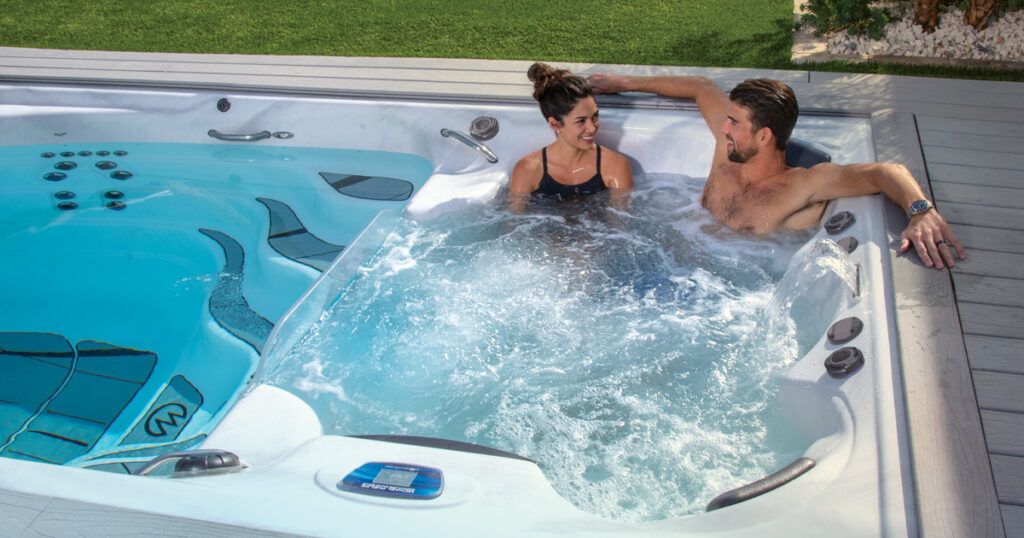
One of the biggest advantages of a swim spa is that you don’t need the space required for a traditional pool. But that doesn’t mean every swim spa is the same size — or that one model fits every backyard.
Choosing the right swim spa size depends less on square footage and more on how you plan to use it.
Are you focused on swim training, water exercise, relaxation, or a combination of all three? The answer can help guide you toward the size that will feel comfortable long-term.
Here’s how to think through the decision.
Why swim spa size matters
If you’ve ever trained in a pool, you know how much length matters. Lap pools are often 25 yards or 25 meters long, while Olympic pools stretch to 50 meters. That distance gives swimmers room to build rhythm, endurance, and speed.
A swim spa works differently. Instead of relying on length, it creates a continuous current so you can swim in place. That means you don’t need a 40-foot lap pool in your backyard to train at home.
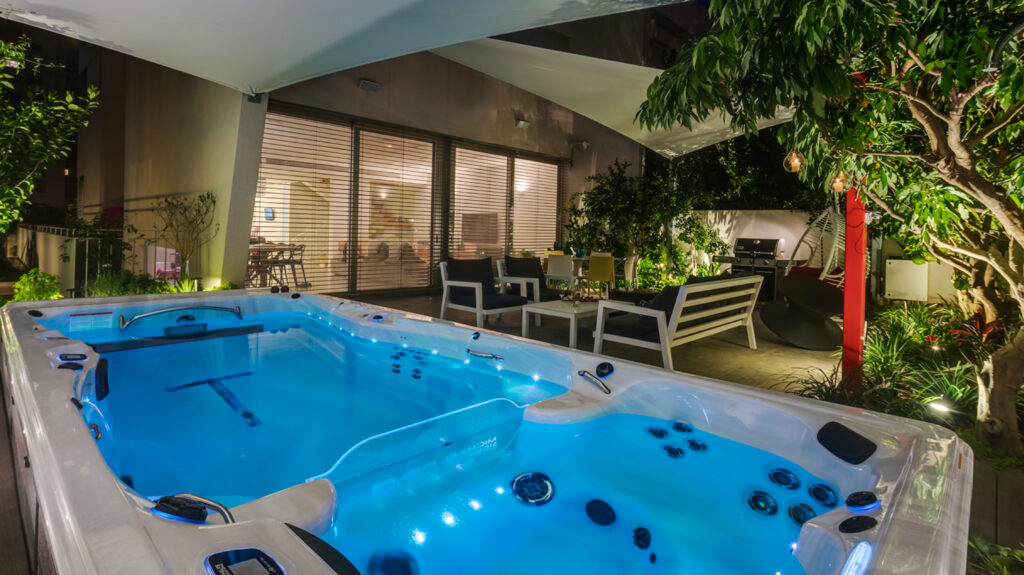
Even so, size still influences how the space feels to use. A longer swim spa can make it easier to maintain body position and create separation between swimming and seating areas. More interior space also allows for water exercise, stretching, or multiple users at once. Smaller models, on the other hand, can be ideal for therapy, gentle movement, or backyards where space is limited.
You don’t necessarily need the biggest swim spa available. Rather, it’s choosing one that matches your space and how you plan to use it most often.
Choosing a size based on how you’ll use your swim spa
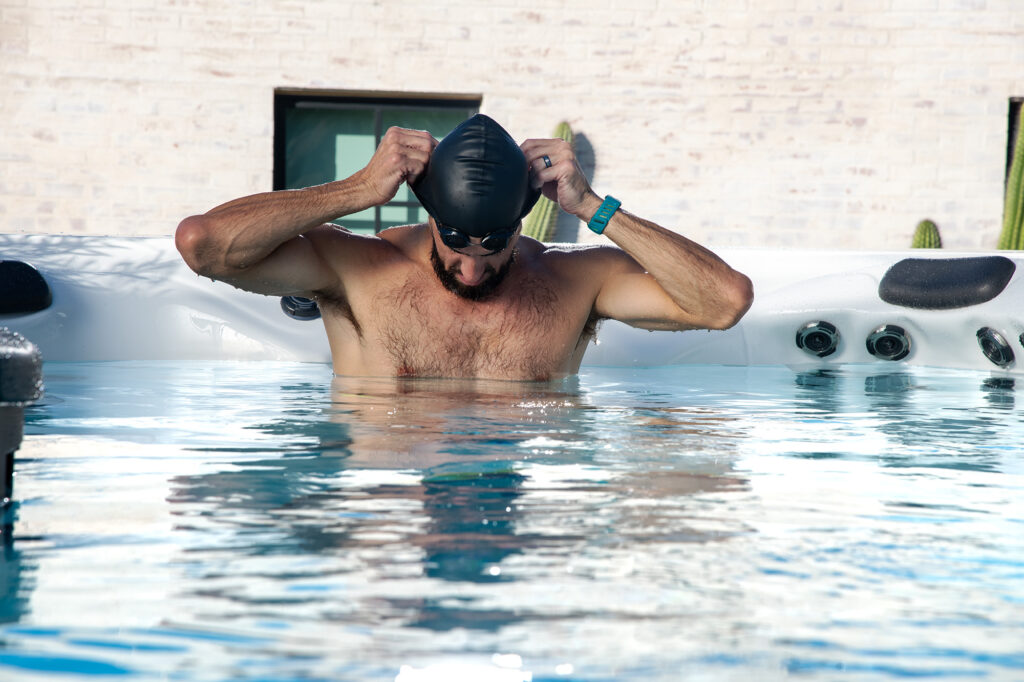
If your focus is swimming or fitness training
For swimmers or homeowners planning to exercise regularly, the most important factor isn’t just the overall length of the swim spa — it’s how much usable swim area it provides.
Some larger spas are designed with extensive seating and entertainment space, which can make them great for social use but reduce the room available for swimming. If your goal is daily exercise or training, a layout that prioritizes open swim space and a clear current path will typically feel more comfortable and effective over time.
A well-designed swim spa allows you to maintain a natural body position in the current while still leaving room for water walking, resistance training, or stretching. For many fitness-focused buyers, that balance between swim performance and versatility matters more than the raw dimensions on paper.
If you want a mix of swimming and hydrotherapy
Most swim spas are designed to support both exercise and relaxation. Even single-body models include therapy seating and massage jets, allowing you to move from a swim or workout into recovery without leaving the water.
For homeowners who want more separation between those experiences, a dual-zone swim spa can offer added flexibility. These models include a dedicated swim area alongside a separate hot tub section, allowing each side to be set to a different temperature.
This setup can make it easier for one person to swim while another relaxes, or for you to shift between exercise and therapy without adjusting the entire spa. While both layouts can support daily movement and recovery, the choice often comes down to how much separation you want between those uses.
If relaxation and family use are the priority
If your swim spa will be used more for soaking, socializing, or light movement, size may be less about swim length and more about seating, comfort, and layout.
Many homeowners choose a model that still allows exercise but offers enough room for multiple users to enjoy the space comfortably.
How swim spa sizes compare to a pool
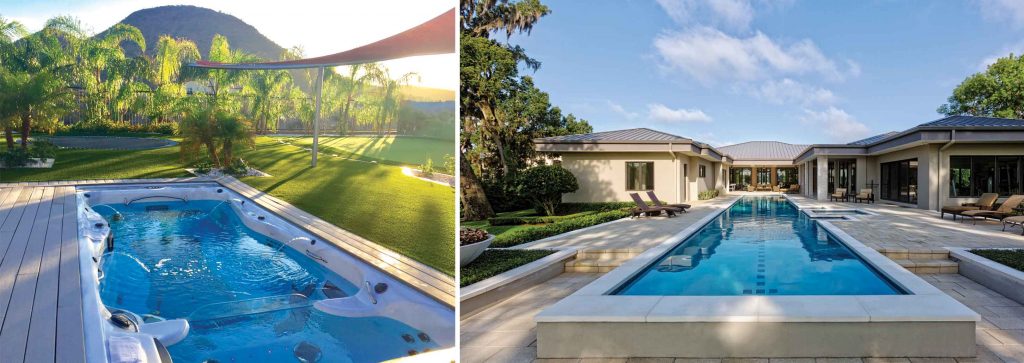
A traditional lap pool often requires at least 40 feet of length for continuous swimming. Swim spas achieve the same training effect using a controlled current in a much smaller footprint.
But the difference isn’t just about the pool itself. An in-ground pool project usually includes surrounding decking, fencing, and clearance requirements that can significantly expand the total space needed in the yard. Local building codes and safety regulations may also influence placement, setbacks, and installation timelines.
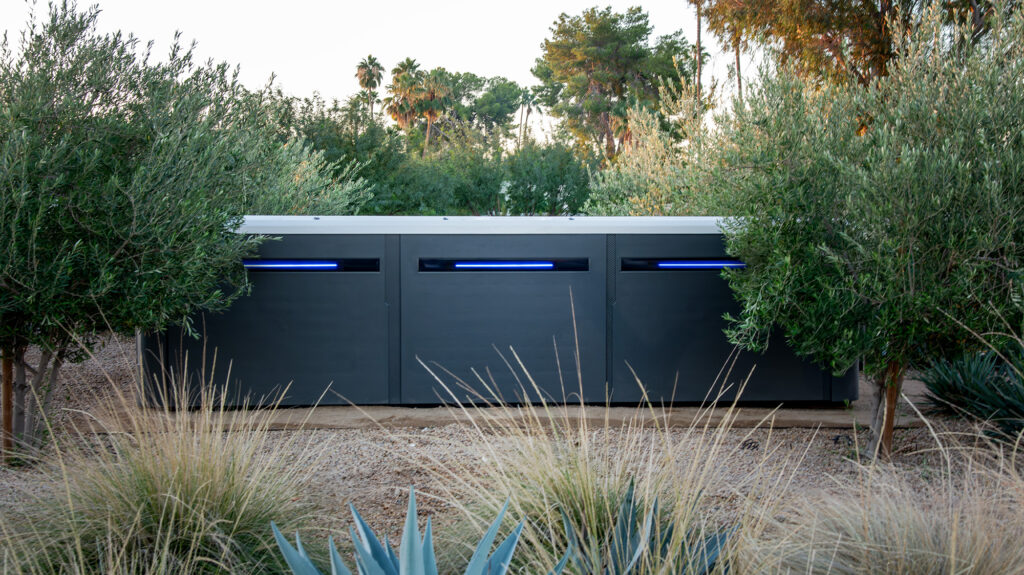
A swim spa, by contrast, is a self-contained unit. While you can create a custom installation with decking or landscaping if you choose, the footprint is typically defined by the spa itself rather than a larger construction project. That flexibility can make it easier to integrate into existing backyards or outdoor living spaces.
Because of that, even larger swim spas often require less overall space than a pool and can usually be installed more quickly. For homeowners who want the benefits of a water environment without committing to a major construction project, that difference can be a deciding factor.
Planning for installation space
When evaluating swim spa size, it’s important to consider not just the spa dimensions, but the surrounding space as well.
You’ll want to plan for:
- Access for delivery and placement
- Clearance for maintenance access panels
- Space for steps, cover lifters, or decking
- Room to move comfortably around the spa
Thinking through these factors early can help you avoid surprises and make installation smoother.
Which size is right for you?
There’s no single “best” swim spa size. The right choice depends on your priorities, your backyard layout, and how you expect to use the space over time.
For homeowners focused on daily movement and exercise, a larger swim area often makes sense. For those who want a blend of fitness and relaxation, a dual-zone layout can offer flexibility. And for buyers prioritizing comfort and ease of use, the overall design and seating arrangement may matter more than raw dimensions.
The goal isn’t to choose the biggest spa available — it’s to choose one you’ll use consistently.
Common questions about swim spa size
What sizes do swim spas come in?
Most swim spas range from about 11 to 21 feet long and around 8 feet wide, though dimensions vary by model and layout. Smaller units are often designed for therapy or compact spaces, while larger swim spas provide more open swim area and room for multiple users.
Is a longer swim spa always better?
Not necessarily. The amount of usable swim area and the interior layout often matter more than overall length. A well-designed swim spa with open swim space can feel more comfortable than a longer model filled with seating.
How deep are swim spas?
Most swim spas are around 50 to 60 inches tall, with water depths typically ranging from the low 40-inch range up to about 51 inches depending on the model and design. Deeper water can make swimming and water exercise feel more natural, while slightly shallower depths may be more comfortable for therapy, stretching, or standing exercises.
Do I need a large backyard for a swim spa?
Usually not. Because swim spas create a current that allows you to swim in place, they require far less space than a traditional lap pool. Many homeowners are able to integrate a swim spa into existing outdoor living areas.
Explore your options
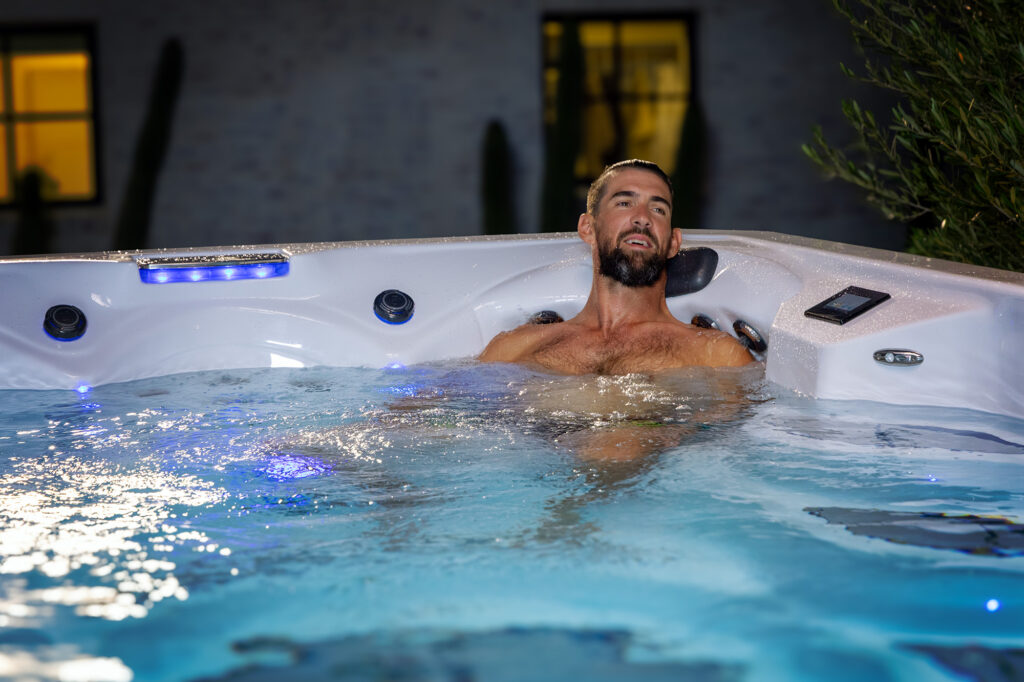
Michael Phelps Signature Swim Spas are designed with performance, comfort, and versatility in mind. Whether you’re focused on swim training, hydrotherapy, or everyday movement, the right model can help you create a backyard space that fits your routine.
To learn more about available models, dimensions, and installation considerations, connect with your local Master Spas retailer or explore your options online.