Water exercise for longevity: Training for healthspan
January 29, 2026



Most of us have met one of those people. They’re in their 80s or 90s, still walking miles a day. Living independently. Sharp, steady, and remarkably capable.
You can’t help but wonder, “What’s their secret?” You ask because you not only admire them but nearly envy them. You don’t want to just grow old, extending your life. You want to expand your healthspan.
In longevity circles, the conversations often become about Blue Zones, biomarkers, and emerging protocols. There are new supplements, wearables, and cutting-edge interventions.
Yet one of the most powerful — and sometimes underestimated—ways to influence both lifespan and quality of life is exercise. The question, then, isn’t whether movement matters, but what kinds of movement you can sustain for decades.
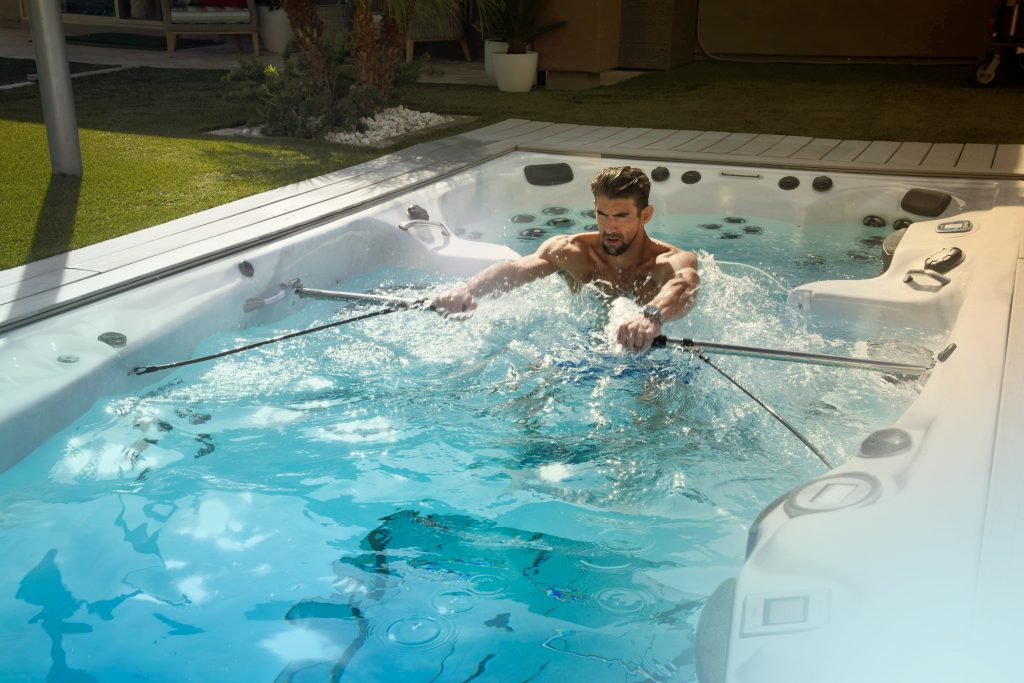
Reducing strain and supporting consistency, water-based exercise can offer a compelling option for people thinking in decades rather than seasons. Pools and swim spas offer space for cardiovascular work, resistance training, and mobility practice with far less orthopedic stress than many land-based fitness programs.
What is healthspan and is it the same as longevity?
They’re related but not interchangeable.
Longevity generally refers to how long you live.
Healthspan refers to how long you remain physically capable, cognitively sharp, and independent during that life.
The term healthspan itself emerged from academic aging research in the late 1980s, introduced by gerontologists who wanted to distinguish simply living longer from living well. For years it remained largely confined to scientific literature. But interest has accelerated dramatically in the past two decades. By the late 2010s, hundreds of peer-reviewed studies were using the term, and in recent years that number has climbed into the thousands—reflecting a surge in scientific and public focus on preserving function as we age.
That shift explains why so many longevity discussions today revolve around movement, metabolic health, injury prevention, and sustainable training rather than single interventions. Exercise is no longer just about short-term fitness or achieving a particular body type. It becomes about protecting joints, supporting cardiovascular health, and maintaining strength and balance. More importantly, it’s finding ways to move that can be practiced for decades.

Exercise remains one of the strongest levers for longevity
Billions of dollars are spent each year by research centers and private companies to understand and advance healthspan. Still, even as new research and technology emerges, one point remains consistent: movement matters.
Across large population studies and long-term analyses, regular physical activity is consistently associated with lower mortality risk, reduced incidence of chronic disease, stronger bones, and preserved functional independence with age.
What’s now gaining increasing attention, however, is how people move.
New research suggests that individuals who regularly engage in a wider variety of physical activities tend to experience lower risk of early death than those whose routines are narrow — even when overall exercise time is similar. In other words, longevity may depend not only on how much you train, but on the diversity of stimulus you give your body.
Scientists studying these patterns propose that mixing movement types challenges multiple physiological systems rather than repeatedly stressing the same tissues. Cardiovascular capacity, muscular strength, coordination, and even cognitive engagement may all benefit when routines rotate rather than repeat.
Why water changes the longevity equation
If variety and sustainability matter, the training environment starts to matter too.
Running can be excellent cardiovascular work. Cycling builds endurance. High-intensity metabolic conditioning develops strength and work capacity. Each has value. But most land-based modalities emphasize a narrower slice of physiology, and over long timelines that concentration can increase orthopedic stress.
Water-based exercise introduces a different equation.
Because buoyancy reduces weight-bearing forces while water resistance challenges muscles and the cardiovascular system simultaneously, aquatic training allows intensity without the same cumulative joint load. That makes it particularly appealing for people thinking in decades rather than seasons.
Researchers often describe exercise as a way to preserve “functional reserve”—the body’s ability to adapt to physical stress and maintain performance as years pass. In longevity circles, that idea carries real weight. You’re not simply building today’s output. You’re protecting your future margin.
Water becomes less about recovery alone and more about strategic continuity — a way to keep training seriously even as joints, connective tissue, and life circumstances change.
Cardiovascular health without orthopedic debt
The longevity payoff of exercise appears to come through multiple biological pathways: improved vascular function, reduced systemic inflammation, healthier autonomic balance, and stronger metabolic regulation.
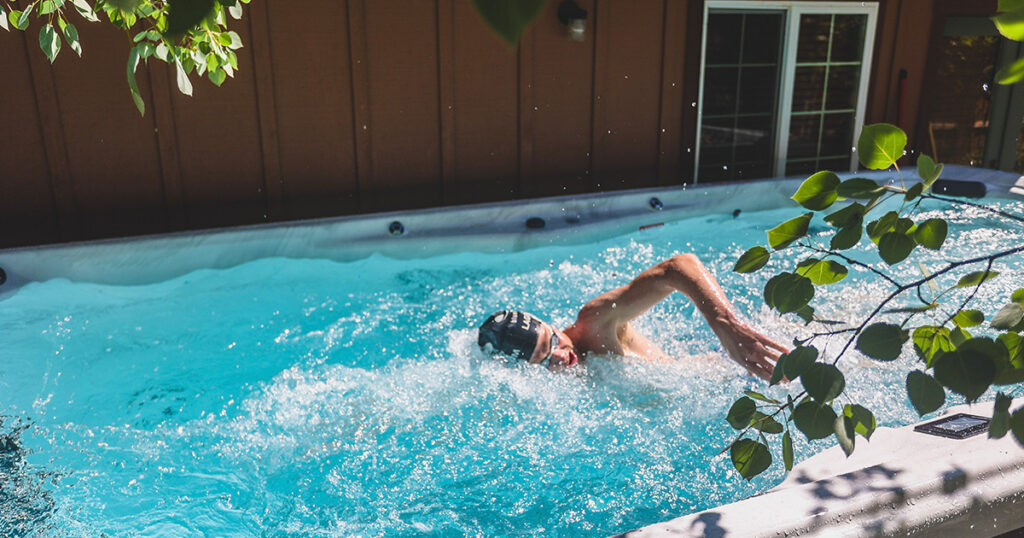
Swimming and resistance-based aquatic workouts deliver sustained cardiovascular demand while minimizing repetitive impact. For people who monitor VO₂ max, resting heart rate, or glucose response, that combination is compelling. It allows meaningful aerobic stimulus without accumulating the types of injuries that often force interruptions in training.
Strength, mobility, and balance
Aging well isn’t just about keeping your heart strong. It’s about maintaining muscle mass, coordination, flexibility, and the ability to move confidently through the world.
Longevity research consistently highlights resistance training as essential for musculoskeletal health and disease prevention. It also emphasizes balance and neuromuscular control as predictors of independence later in life.
Water creates an unusual convergence of these needs.
Because resistance exists in every direction, muscles work continuously through a range of motion without heavy external loads. Meanwhile, the unstable environment challenges balance and coordination in subtle ways that support neuromuscular health.
For people managing old injuries or simply trying to keep training volume high without chronic flare-ups, this kind of stimulus can extend athletic life rather than shorten it.
Longevity is as much about adherence as optimization
One of the most consistent findings in aging research has little to do with VO₂ max curves or molecular pathways. It has to do with follow-through.
Exercise routines only deliver long-term benefits when people can maintain them across years—not just during motivated bursts or ideal seasons of life. Injuries happen. Travel intervenes. Schedules shift. Motivation fluctuates. Longevity strategies that ignore those realities tend to fail, even when the underlying physiology is sound.
That’s why many longevity researchers now look beyond protocols alone and toward context: the environments, access points, and habits that make movement easier to repeat.
For some, that means a gym that’s close and well-equipped. For others, it means shaping home spaces so they quietly remove friction—eliminating commute time, crowding, weather dependence, or scheduling barriers that erode consistency over time.
Water-based exercise tends to perform well through that lens. It allows cardiovascular training, resistance work, and mobility in a single session while placing less cumulative stress on joints. Its intensity can scale up or down depending on the day, which makes it easier to keep training through injuries, travel interruptions, and aging physiology.
Where luxury swim environments enter the conversation
When aquatic training is available in your daily environment, rather than requiring a drive across town or limited lap-lane availability, it becomes far easier to sustain. Over decades, that kind of structural support can matter as much as any specific workout plan.
For people who treat healthspan as long-term infrastructure rather than a short-term project, access matters.
High-performance aquatic environments at home remove common barriers to exercise: commute time, crowded facilities, inconsistent water quality, and limited availability.
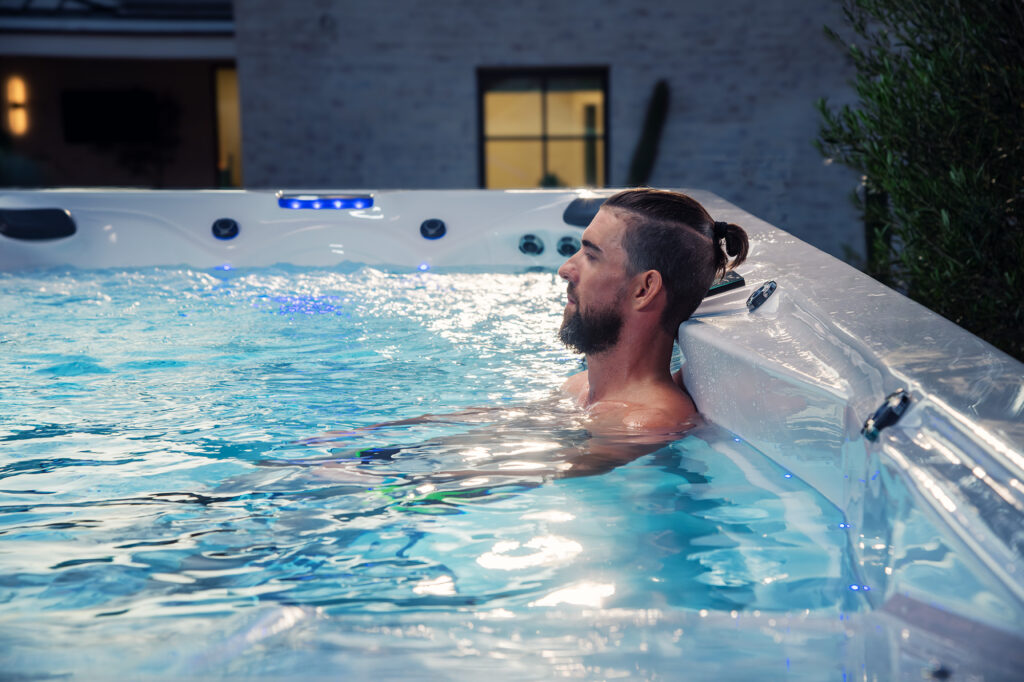
This is where premium swim spa environments, including those within the Michael Phelps Signature Swim Spas collection, have begun to attract attention among longevity-focused homeowners.
Rather than positioning water exercise as rehabilitation, these systems emphasize swim mechanics, adjustable resistance, hydrotherapy, and year-round usability — supporting both training and recovery in a private setting.
A different definition of performance
Water exercise and serious are not often used in the same sentence. However, for people serious about extending healthspan, water-based exercise is not about stereotypes or stepping back from challenging workouts.
It’s about staying capable in your 50s. Protecting joints in your 60s. Preserving independence in your 70s. Supporting cognitive and cardiovascular health across decades.
Incorporating water exercise into your daily routine may be one of the most strategic additions you can make—especially if your goal isn’t simply to live longer, but to keep moving well while you do.